On this page
Guide · 9 min read
Microcement pros and cons: an installer's honest list
Most pros-and-cons lists for microcement are written by companies selling microcement kits, which is why the "cons" section is usually three sentences of hand-waving. We install it for a living across London and Surrey — and we also talk people out of it several times a month. This is the list we actually run through at survey stage: what the material genuinely does brilliantly, where it disappoints, and the room-by-room verdicts.
The pros
- Genuinely seamless. No grout lines, no thresholds, no trims. One continuous surface across walls, floors, and formed details — the visual calm is the reason most clients call, and no tile format can replicate it.
- Goes over what you have. Tiles, screed, plasterboard, ply — at 2–3 mm total, microcement renovates a room without demolition. Doors don't need trimming and plumbing stays put. The overlay case is set out in microcement over tiles.
- Waterproof as a system. Sealed correctly it's a proven wet-room finish — showers, bathroom floors, splashbacks. (The nuance — the sealer does the waterproofing, not the cement — is in is microcement waterproof?)
- Underfloor heating's best friend. Thin enough to transmit heat quickly, and with the right mesh it cycles without cracking — see UFH compatibility.
- Handles curves and sculptural detail. Arches, curved partitions, integrated benches, basins and niches — where tile needs cuts and joints, microcement just continues.
- Low, cheap maintenance. Neutral cleaner and a mop. No grout to scrub or re-do, no silicone beads to replace. One sealer refresh around year 10–12 keeps a wet room going.
- Repairable, usually invisibly. Local damage can be patched and resealed; on textured finishes the repair typically disappears completely.
- Reads as a premium finish. Estate-agent feedback on our projects consistently treats microcement bathrooms and kitchens as a positive at viewings — it signals a recent, considered renovation.
The cons
- The upfront premium is real. £100–£220/m² installed versus £60–£120/m² for mid-range tiling. The lifetime numbers usually recover it in wet zones (see microcement vs tiles), but the first invoice is bigger, full stop.
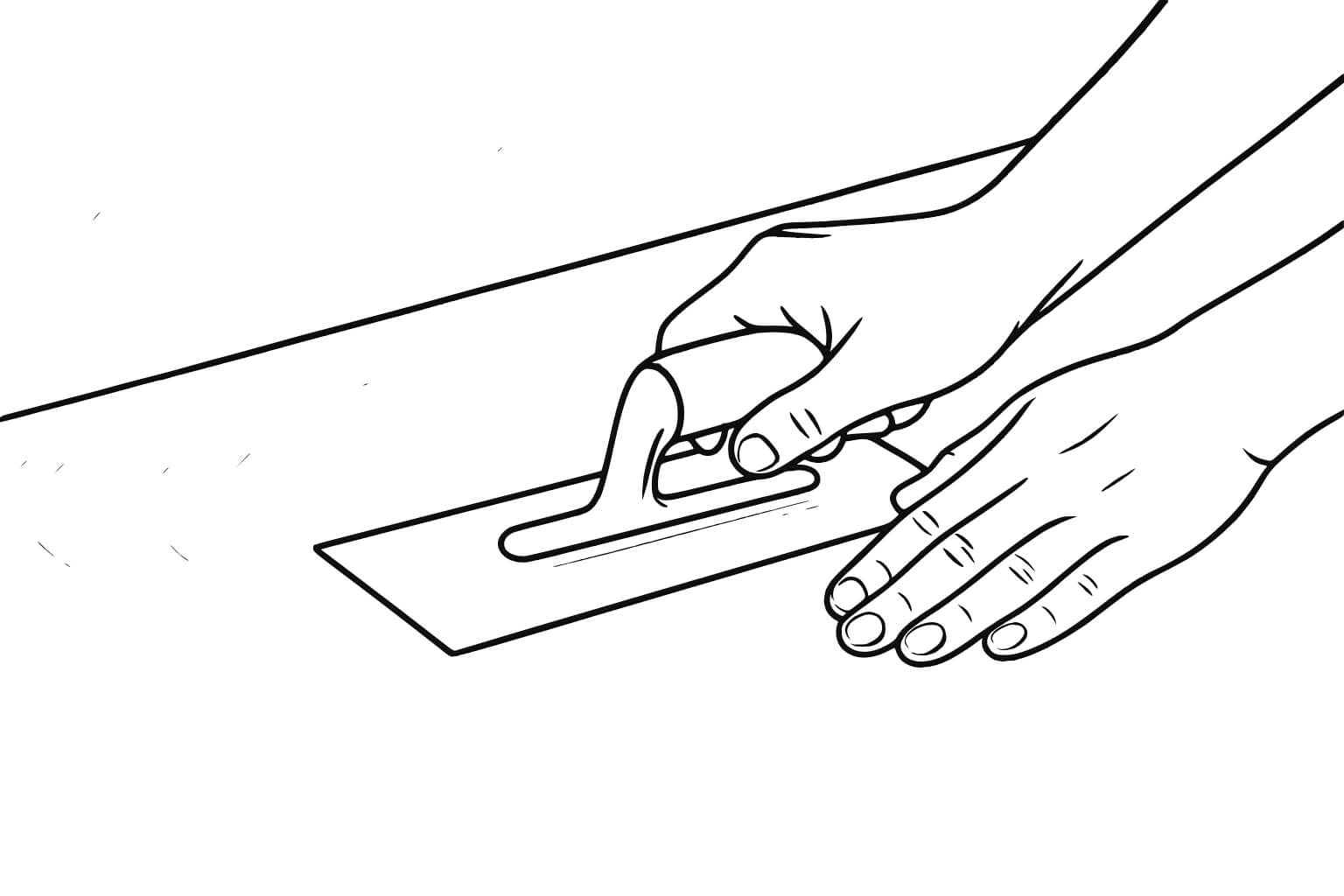
- Installer-dependent quality. This is the big one. The same materials produce a superb room or an expensive failure depending on who's holding the trowel. Hairline cracks, blotching, debonding and sealer failure — catalogued honestly in common issues — are almost always installation errors, not material faults. Tile is far more forgiving of a mediocre tradesman.
- Slow, sequenced programmes. Primer, mesh, two base coats, two finish coats, sealer — each with cure time. A bathroom is 7–12 working days; promises of "done in three days" are the first red flag in the cost guide's cheap-quote checklist.
- Not a DIY material in practice. Kits exist, and the marketing makes it look like plastering. The failure rate of first-time applications is high, and a failed DIY room costs more to strip and redo than a professional install would have cost.
- Hairline cracks are possible. Even on good installs, buildings move. Mesh and correct prep make cracks rare and repairable, but a grout line can't crack — a continuous surface can.
- No pattern. Colour, texture and sheen — yes, 40+ colours (see colours & styles). Zellige, encaustic print, mosaic — no. If the design needs pattern, tile does that job.
- Heat and harsh chemicals need respect. On worktops, trivets are non-negotiable and bleach-heavy cleaning shortens sealer life. It's sealed cement, not granite.
- Colour matching later is imperfect. Extending a floor two years on means a new batch and a slightly different weathering state. Quote connected areas together (a lesson repeated in the floor cost guide).
Is microcement expensive?
Compared with paint or budget tile — yes. Compared with the finishes it actually competes against in the rooms people specify it — quartz worktops, large-format porcelain, polished concrete, natural stone — it sits mid-pack: cheaper than stone and polished concrete in renovations, level with quartz, above standard porcelain. The honest per-room numbers (with what drives them up and down) are in the microcement cost guide; the 15-year view, where wet-zone microcement comes out cheaper than tile, is in microcement vs tiles.
Verdict: bathrooms — outstanding
The strongest use case. Grout is tile's weakness precisely where bathrooms punish it, and a sealed continuous surface removes the whole failure category: no mould lines, no re-grouting, no silicone cycle. Slip-rated floor finishes handle the wet floor question; the sealer system handles the water. Budgets run £4,500–£18,000 depending on size and detail (see microcement bathroom cost), and the daily-life reality five years in is covered in microcement in bathrooms. The one condition: the wet-zone sealer spec must be right, because a cheap sealer in a shower fails in 18–36 months.
Verdict: kitchens — strong, with caveats
Worktops, splashbacks and continuous floors look superb and wipe clean without joints for crumbs to hide in. The caveats are behavioural: hot pans need trivets, red wine and beetroot want wiping up rather than leaving overnight, and an aggressive-bleach household will shorten the sealer's life. If that sounds like nagging, quartz is more forgiving; if it sounds like normal kitchen manners, the design payoff is covered in microcement kitchen design.
Verdict: floors — excellent at scale
Open-plan ground floors are where microcement earns its keep: one surface, no thresholds, UFH-friendly, and per-m² pricing that improves with area (£120–£200/m², detail in the floor cost breakdown). Single small rooms carry the setup cost less comfortably. The substrate must be right — cured screed or overboarded timber — because a floor inherits every sin beneath it.
Verdict: walls — a design choice, not a necessity
Dry-zone walls are microcement's most optional application: paint is cheap and plaster is fine, so you're paying for the aesthetic and the durability, not solving a problem. The exceptions where walls genuinely justify it — wet zones, high-traffic hallways, curved geometry, fireplace surrounds — are mapped in where microcement walls earn their place.
Who should skip microcement
- Budget-first bathroom refits — a £2,000 finishes budget buys a decent tiled room and no microcement room at all.
- Committed DIYers — unless you'll practise on boards first and accept the risk, this is one of the trades worth paying for.
- Pattern-led designs — if the moodboard is zellige and encaustic, tile is the medium; consider the hybrid approach in microcement vs tiles.
- Five-year flippers — you'll pay the premium and sell before the maintenance dividend arrives (though the viewing-appeal argument cuts the other way).
Still on the fence for a specific room? The FAQ answers the recurring questions, and a survey visit will tell you honestly whether your room is a good microcement candidate — including when the answer is "keep the tiles".