On this page
Specification · 7 min read
Is microcement waterproof? The honest answer
Short version: bare microcement is not waterproof — the sealed system is. That distinction sounds pedantic, but it's the single most useful thing to understand before you put microcement in a shower, because it tells you exactly where cheap installs fail and what to check in a quote. Here's how the waterproofing actually works, layer by layer, and where its limits are.
The short answer
Microcement is a cement-and-resin coating, and like any cementitious material it's porous on its own — a glass of water left on unsealed microcement will darken it as the moisture soaks in. What makes a microcement bathroom waterproof is the sealer system: two coats of polyurethane applied over the finish coats, which close the surface completely and turn it into a continuous water-shedding membrane with no joints for water to exploit.
So when suppliers say "microcement is waterproof", what they mean — and what you should hold your installer to — is that the finished, sealed system is waterproof. The corollary is that every waterproofing property your bathroom has lives in those top two coats and the discipline of the person applying them.
How the waterproofing actually works
The full wet-zone build-up, from the substrate out:
- Tanking membrane on the substrate in wet zones (more below).
- Primer matched to the substrate — the adhesion layer.
- Fibreglass mesh + two base coats — the structural body that resists cracking, because a crack is a future leak path.
- Two finish coats — colour and texture; still porous at this stage.
- Two-coat PU sealer, wet-zone grade — the actual waterproofing. In showers we also use a slip-rated variant on floors.
Because the surface is continuous, there are no grout lines, no silicone joints and no tile edges — the places water gets into a tiled bathroom simply don't exist. That's the structural reason microcement wet rooms age better than tiled ones (the comparison is quantified in microcement vs tiles).
Where tanking still matters
A properly specified wet room gets a tanking (waterproofing) membrane under the microcement system, on the boarding behind shower walls and across the floor. If the sealer is the raincoat, tanking is the second skin: it protects the building fabric if the surface is ever compromised — a drilled hole for a new shower rail, an impact chip that goes unrepaired, a sealer past its refresh date. Belt and braces is the correct spec in a zone that gets direct water every day. A quote that treats microcement itself as the tanking layer is under-specified; that's one of the wet-zone red flags covered in the bathroom cost guide.
Showers, wet rooms, steam rooms and outdoors
- Shower enclosures and shower-over-bath walls — yes, routinely. Wet-zone sealer, tanked substrate, slip-rated floor if the tray area is microcement too. See microcement showers.
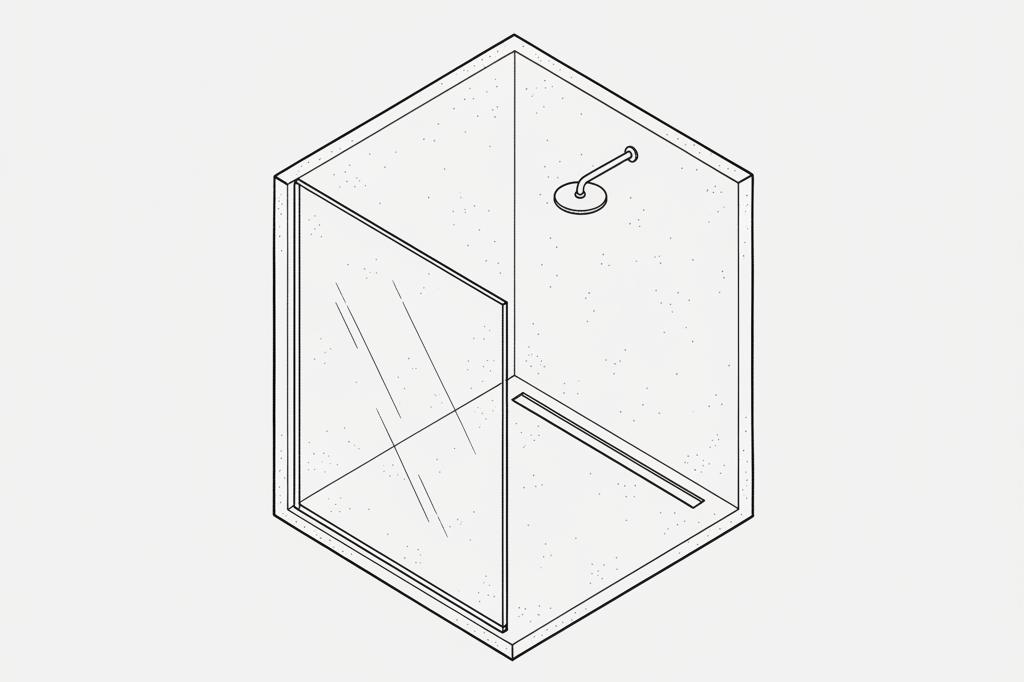
- Open wet rooms — yes, and arguably microcement's best room: the floor falls to a linear drain with no threshold and no joints. The formed-falls detailing is priced in the bathroom cost guide.
- Steam rooms — yes with the right spec: steam is the hardest test (hot, saturated, pressurised vapour), so the sealer grade and full-envelope tanking matter more than anywhere else. Ask specifically about steam-rated systems.
- Splashbacks and kitchen wet areas — yes, comfortably within standard wet-zone spec.
- Outdoors — rain isn't the issue; UV and frost are. Exterior projects use a different resin chemistry and an aliphatic sealer (see microcement outdoor).
- Pools — permanent immersion is its own discipline with full-immersion sealer grades and longer cure schedules; see microcement pools.
What sealer failure looks like
When a microcement shower "stops being waterproof", it's almost never the microcement — it's the sealer, and it announces itself in a recognisable sequence: water stops beading and starts sitting flat, then dark damp patches appear that are slow to dry out, then the surface feels slightly chalky where the film has worn through. The common causes are a dry-zone sealer used in a wet zone, sealer applied over uncured microcement, or mix-ratio errors on two-part products — all installation shortcuts, all catalogued in common issues, and all avoidable with the questions below.
Caught early, the fix is undramatic: clean back and re-seal, typically £25–£45/m², no demolition. Ignored for a year or two in a daily-use shower, moisture starts working on the layers beneath, and the repair grows accordingly.
How long does it stay waterproof?
A correctly specified wet-zone sealer in a family bathroom is good for 10–15 years of daily use before it wants a refresh — a one-day, done-in-place job (typically £800–£1,500 for a standard bathroom) where only the top coat is renewed. The base layers never come off. That single refresh cycle is the entire long-term waterproofing maintenance, which is precisely why the 15-year cost comparison against tile (with its re-grouting and silicone cycles) lands in microcement's favour — the arithmetic is in the cost guide.
The questions that protect you
Waterproofing quality is invisible at handover — a bad shower looks identical to a good one for the first year. These questions separate them at quote stage:
- "Which sealer product, and is it wet-zone rated?" The answer should name a product and grade, not "our standard sealer".
- "Is the shower zone tanked beneath the system?" The answer is yes, with a named membrane.
- "What's the slip rating on the floor finish?" Wet-room floors should have a slip-rated sealer variant, not the gloss wall product.
- "How long does the sealer cure before first use?" Realistic answers run days, not hours — rushing this is a classic cause of early failure.
- "What does the warranty say about wet zones specifically?" Workmanship-plus-materials with wet-zone use explicitly covered is the right answer.
The wider context — what daily life with a microcement bathroom is like, slip resistance, cleaning — is in microcement in bathrooms; the full budget picture is in the bathroom cost guide.