On this page
Cost · 8 min read
Microcement bathroom cost: UK 2026 budgets, from en-suite to wet room
Bathrooms are where most people meet microcement for the first time, and where quotes confuse the most — because a "microcement bathroom" can mean a shower zone, four walls and a floor, or a full wet room, and the microcement is only one trade among several in the room. These are our real 2026 budget bands across London and Surrey, what sits inside and outside the microcement quote, and how the total compares with tiling the same room.
Project totals by bathroom size
Total microcement cost — walls, floor, shower zone and built-ins, including prep and wet-zone sealer — for the common London and south-east scenarios in 2026:
- Compact en-suite (3–4 m² floor, walls + floor + small shower) — £4,500–£8,000, typically 7–10 working days.
- Standard family bathroom (5–7 m², walls + floor + shower or shower-over-bath) — £6,500–£12,000, 9–12 working days.
- Larger master bathroom (separate shower and bath, integrated vanity, niches) — £10,000–£18,000, 12–16 working days.
- Open wet room (continuous floor-to-wall finish, linear drain, no enclosure) — £9,000–£16,000; the floor-fall detailing adds £500–£1,000 over an equivalent enclosed shower.
- Shower zone only (three shower walls + tray area, rest of the room untouched) — £2,500–£4,500. The smallest sensible wet-zone project; below this size, setup costs dominate.
The underlying rate is £140–£220/m² for bathroom walls and floors — above the £100–£180 dry-wall rate because wet zones need the upgraded sealer system, a slip-rated floor finish, and carry more detail per square metre than any other room. All the per-application rates sit in the microcement cost guide.
What the microcement quote includes — and what it doesn't
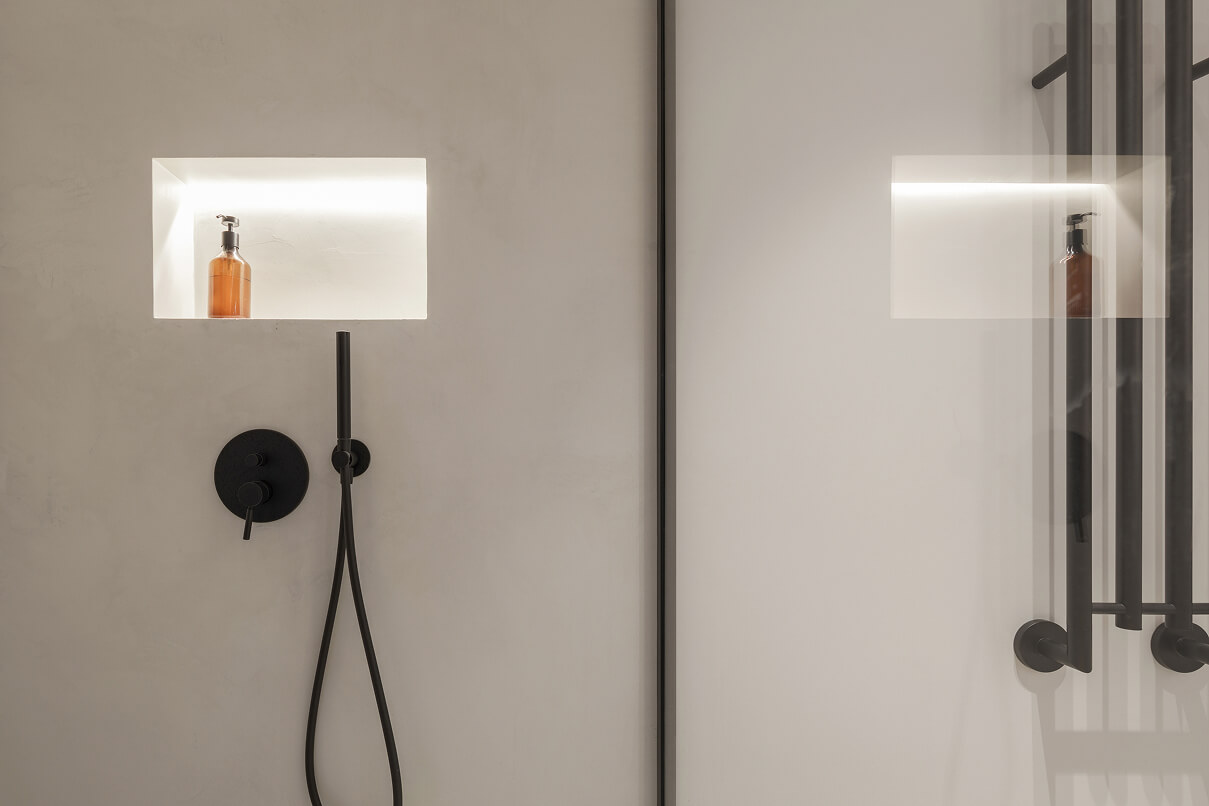
Inside the quote: substrate prep, priming, mesh, base and finish coats, the wet-zone sealer system, and the forming of any integrated details (niches, benches, hobs). Outside it, and easy to forget when comparing against an all-in bathroom-fitter price:
- Sanitaryware and brassware — bath, basin, WC, shower valve and screen.
- Plumbing and electrics — moving supplies and wastes, lighting, ventilation, electric UFH if wanted (see underfloor heating compatibility for how that sequences).
- Structural or layout changes — stud walls, doorways, window alterations.
For a full renovation, that fitter's package typically adds £4,000–£12,000 on top of the microcement. If you're comparing a microcement bathroom against a tiled one, compare like scopes: the sanitaryware and plumbing cost the same either way; the finishes are where the quotes differ. What daily life in the finished room is actually like — cleaning, slip resistance, how it wears — is covered in microcement in bathrooms.
What pushes a bathroom quote up
Within the bands above, the position of your project is set by a handful of variables:
- Detail count — every niche, integrated bench, recessed shelf and formed vanity adds 1–2 days of crafting time. A detail-heavy spec (curves, multiple built-ins, two-tone blends, custom colour matching) adds 25–40% to the base price.
- Substrate condition — sound existing tiles or dry, flat boarding are the cheap baseline; failing tile beds, leak damage or out-of-plumb walls all mean remedial work before the system goes on.
- The wet room decision — losing the enclosure looks simpler but costs more: the whole floor becomes a formed, falls-to-drain wet zone rather than a flat floor with a tray in one corner.
- Access — a top-floor London flat with no lift and a managing agent adds real cost; the logistics arithmetic is in the cost guide's variation section.
Keeping the tiles down: the overlay saving
Most bathroom refurbs start with a tiled room, and the single best cost decision available is usually to leave the tiles where they are. Microcement overlays sound existing tile at the standard rate — no rip-out labour, no skip, no substrate repair behind the tiles, no disturbed plumbing. On a typical family bathroom that avoids £900–£1,800 of cost and two to three days of the dirtiest work in the programme.
The overlay has conditions — the tiles must be sound, the grout lines get filled flush, and the primer must be rated for non-absorbent surfaces. The full system, and the cases where we'd insist on removal instead, are in microcement over tiles.
Versus a tiled bathroom — upfront and over 15 years
Upfront, microcement carries a premium: a mid-range tiled family bathroom's finishes come in around £6,500 where the equivalent microcement treatment is around £8,000. The gap closes — then reverses — once maintenance enters the picture:
- Microcement — one sealer refresh around year 12 (~£1,200, a day's work in place). 15-year total: ~£9,200.
- Tile — re-grouting around years 6 and 12 (£1,200 + £1,400), silicone sealant renewal every 2–3 years (~£1,800 across the period), occasional grout and tile repairs (~£500). 15-year total: ~£11,400.
The crossover lands around year 7–8, after which the microcement room is simply cheaper to own — and the gap keeps widening past year 15. The full methodology, including the dry-zone version of this comparison where the numbers are closer, is in the cost guide's lifetime-cost section — and the complete material head-to-head, beyond cost alone, is in microcement vs tiles.
Wet-zone red flags in a cheap bathroom quote
Bathrooms are the least forgiving place to buy a cheap microcement install, because water finds every shortcut. Three questions expose most of them:
- "Which sealer, exactly?" Wet zones need a wet-zone-grade sealer system. A standard PU everywhere is the classic cheap-quote move — it looks identical at handover and fails in the shower within 18–36 months.
- "How many working days?" Realistic minimum for a full bathroom is 7–12 days including cure stages between coats. Materially quicker promises mean skipped cure time, and the consequences — blotching, weak adhesion — are catalogued in common issues.
- "Is mesh and the correct primer in the spec?" Especially over existing tiles. The complete question list, with the answers a competent installer gives, is in the cost guide and the FAQ.
For the design side of the decision — sealer chemistry, slip ratings, and whether a microcement bathroom suits how your household actually uses the room — start with microcement in bathrooms, then put numbers on it with a survey.