On this page
Cost · 10 min read ·
Microcement vs Venetian Plaster: Which Seamless Finish Where
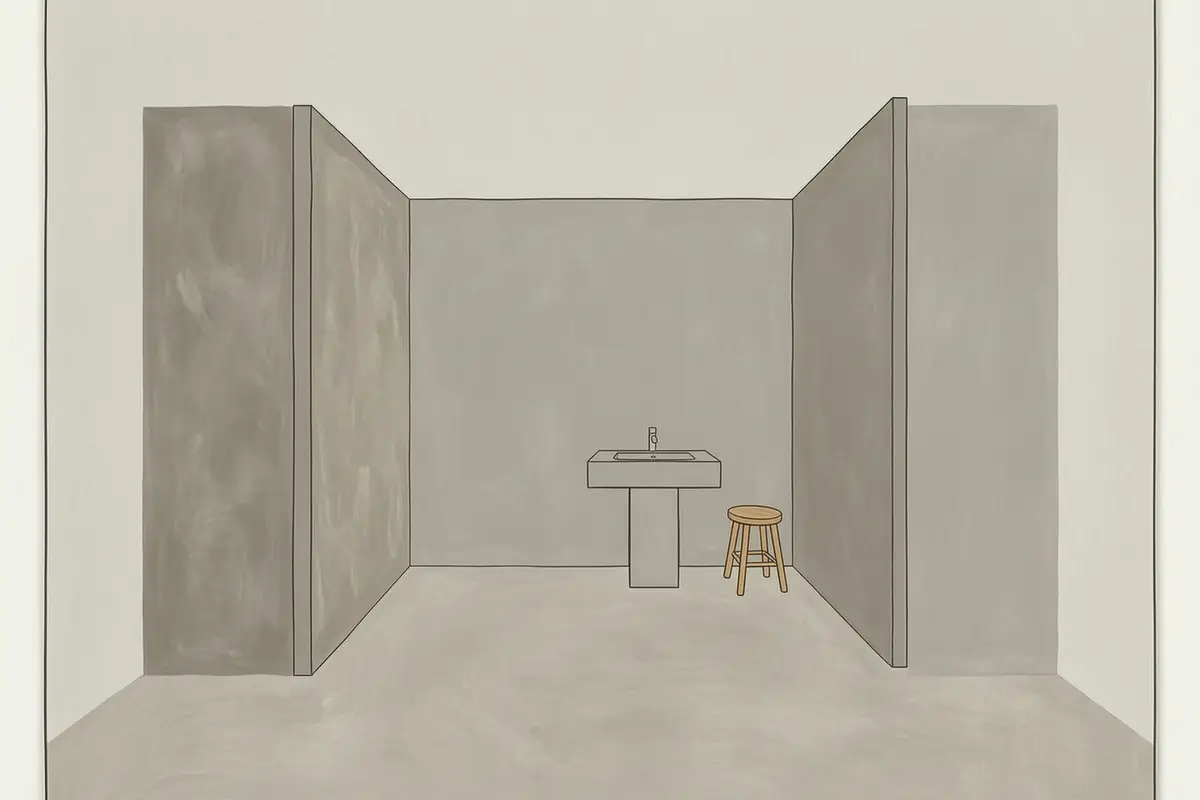
The two finishes get confused constantly, because from across a room they can look alike: a soft, seamless, hand-finished surface with no grout lines and no joins. They are not the same material, and they are not interchangeable. Get the choice wrong and you either pay for a floor finish that belongs on a wall, or put a wall finish somewhere it will take on water and fail.
The short answer: Venetian plaster is a lime-and-marble wall and ceiling finish, burnished to a polished sheen and not waterproof under continuous water. Microcement is a cement-and-polymer coating, sealed with polyurethane, that goes on floors, showers, wet rooms and worktops as well as walls. If the surface gets walked on or regularly wet, choose microcement; if it is a dry feature wall or ceiling where you want depth and shine, Venetian plaster is the better tool.
What each material actually is
Microcement is a cement-based coating blended with fine sand, polymers and pigment, applied by hand in thin layers over a primer and a fibreglass mesh, then finished with colour coats and a sealer. The whole build is roughly 3 mm, and it is the polyurethane sealer on top — not the cement — that gives the surface its water resistance and its matt, satin or gloss character. The system goes down in the order the manufacturer’s datasheet gives it:
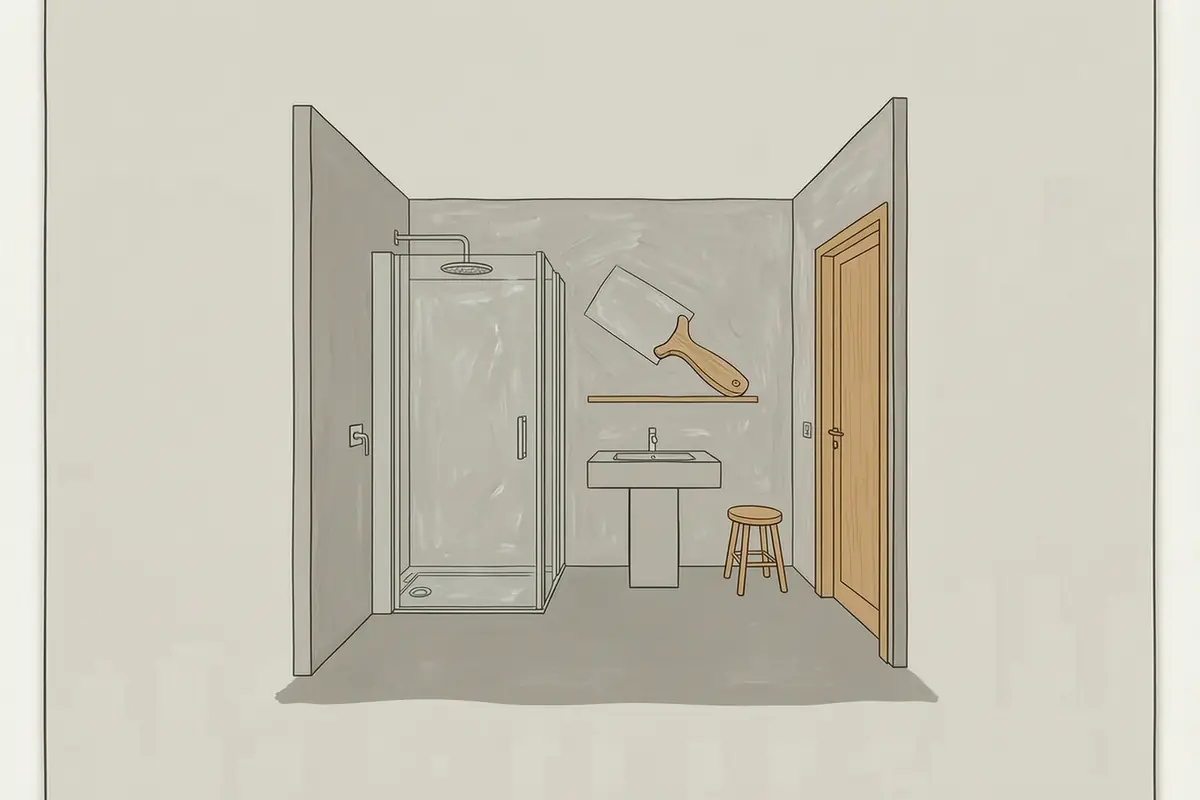
- Surface preparation and a primer suited to the substrate.
- A first microcement coat, the base layer.
- A second microcement coat, the finish or texture layer.
- Sealing, with an optional finishing wax or oil.
That same build-up — primer, mesh, base coats, finish coats, sealer — is what our installers lay down on every job; it is the sequence described in our complete guide to microcement.
Venetian plaster is a different chemistry entirely. It is slaked lime putty mixed with finely ground marble dust, applied in several thin coats with a steel trowel and then burnished — compressed and polished by hand — to close the surface and bring up a sheen. Wikipedia’s entry on the material describes it as slaked lime and marble dust, applied in thin, multiple layers and burnished to a smooth, glass-like sheen, and Armourcoat, a UK polished-plaster maker, describes its marmorino as three or four fine layers and its stucco lustro as four to six, polished to a mirror finish. There is no polyurethane sealer doing the work; the polish comes from the lime and marble being compressed, then protected with a wax or soap finish.
That single difference — a sealed cement-polymer system versus a burnished lime-marble surface — drives everything else: where each can go, how it handles water, and how it wears.
Where each one belongs
Venetian plaster is a wall and ceiling finish. Wikipedia records it as used mainly internally on walls and ceilings, as a stand-in for marble on columns and curved surfaces, and Armourcoat frames its range as wall finishes for interior surfaces. In our work it goes on living-room, bedroom and hallway walls and on ceilings — never on a floor, and in a wet area only as tadelakt, the lime plaster polished with olive-oil soap that was made for hammams. The reason is practical: a burnished lime surface is hard but comparatively soft and porous, and it has no sealer membrane to stand up to foot traffic or standing water.
Microcement is the generalist. Because it is sealed, it works on floors, shower walls, wet rooms, kitchen worktops, stairs and even swimming pools — the applications we install across London and Surrey, listed on our microcement applications page. It also does walls, which is where the two finishes genuinely overlap.
So the decision usually comes down to the room. A dry feature wall or a ceiling where you want the depth and light-play of polished marble: Venetian plaster. A floor, a shower, a bathroom wall that gets splashed, a worktop: microcement. The overlap is the dry wall, and there the choice is about the look you want, not the physics.
Water: the line that decides most rooms
This is the single most important difference, and the one people get wrong. Standard Venetian plaster is not waterproof. A wax top coat sheds splashes and steam, but no wax or sealant makes a lime surface stand up to continuous running water, so our rule is plain: it does not go inside a shower enclosure or anywhere with direct, sustained water contact. For shower walls and wet rooms we use microcement instead.
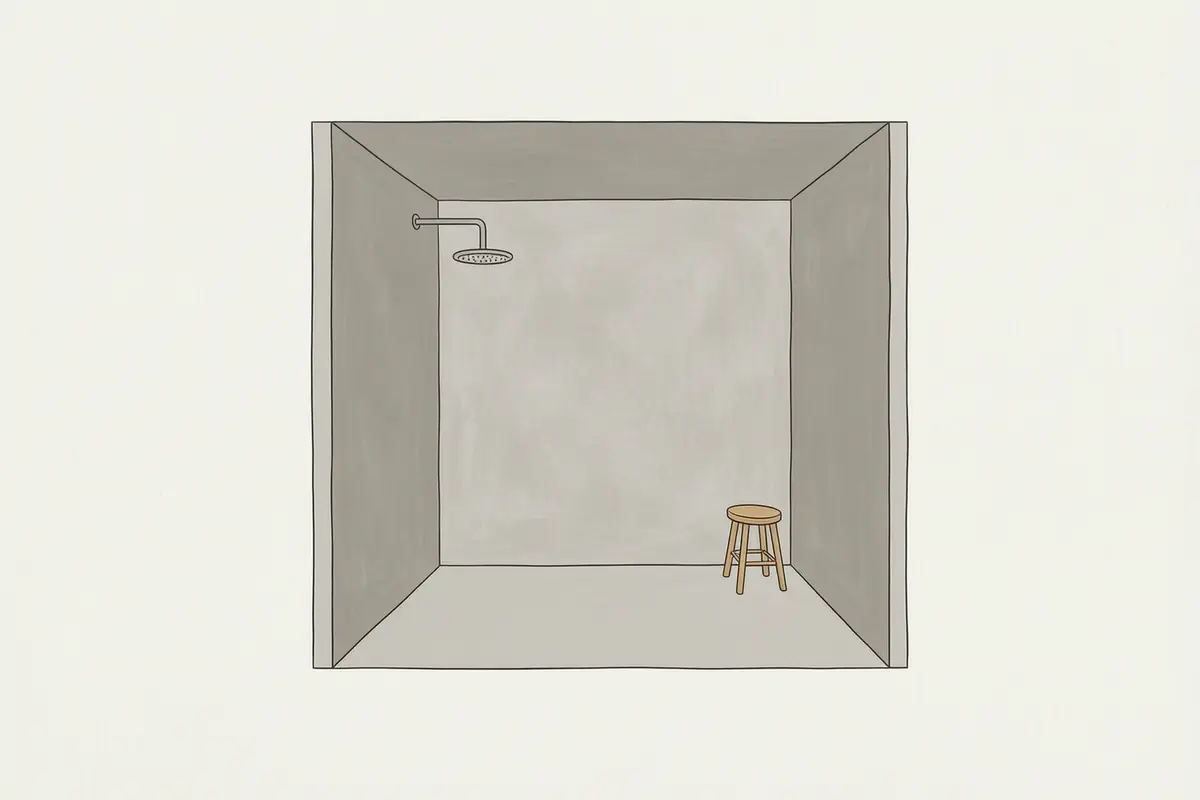
That does not mean Venetian plaster is banned from bathrooms. It handles humidity, steam and the occasional splash, so it works on a bathroom feature wall, around a basin or on a ceiling — as long as it is not in the direct spray line of the shower. The finish matters too: denser, burnished surfaces seal and clean better than heavily textured ones.
Microcement, sealed with a wet-zone polyurethane sealer, is what we specify where water is continuous — showers, wet rooms and bathroom floors. The sealer, not the cement, is what makes it water-resistant, and the sealer grade has to match the room; that logic is covered in our microcement in bathrooms post. If a room has a shower in it, that is usually the end of the debate.
Durability and repair
Microcement is the harder-wearing of the two: it resists impact and cracking and suits high-traffic areas, where Venetian plaster is durable on a wall but shows wear over time, especially where it stays damp. That matches how we use it: a sealed microcement floor takes chairs, boots and dropped objects that would mark a burnished lime wall.
The trade-off is repair. Venetian plaster is repairable in place by a plasterer — a scuff or chip can be re-troweled and re-burnished, and the finish re-waxed, though matching an aged, burnished surface takes a skilled hand. Microcement repairs are local too: a scratch or chip is re-troweled and re-sealed in the affected area, and because the finish is hand-applied the patch blends into the surrounding texture. Whole-surface failures on either material are almost always an installation or specification problem, not wear — the failure modes we cover in common issues and how to avoid them.
Neither is maintenance-free. Venetian plaster wants re-waxing every few years, and a sealed microcement surface benefits from a sealer refresh over a long timescale. The honest difference is that microcement’s sealer is a deliberate, replaceable membrane, where Venetian plaster’s protection is wax sitting on a polished lime surface.
Sheen and finish
This is where Venetian plaster earns its keep. Burnished lime-marble takes a depth and a mirror-like polish that microcement does not try to match — the finishes run from a polished, marble-like gloss down to matt and textured, and Armourcoat’s stucco lustro is polished to a mirror finish. If the brief is “polished marble wall with real depth,” that is Venetian plaster’s home ground.
Microcement reads differently: a calm, mineral, architectural surface, closer to polished concrete than to marble. Its sealer can be matt, satin or gloss, but the character is monolithic and understated rather than lustrous. That is a deliberate difference, not a shortfall — the two materials are aimed at different looks, and the choice between them on a dry wall is genuinely aesthetic.
Cost: what moves each quote
The numbers are closer than people expect, and the comparison only makes sense like-for-like. Polished-plaster quotes vary with the finish: a satin marmorino is a few coats, a high-polish stucco lustro is four to six coats and hours of burnishing, and labour is the largest part of the price. Ask for the finish and the layer count on the quote, not just a rate per square metre.
Microcement sits in a similar band. Our microcement cost guide prices walls at £100–£180/m² and floors at £120–£200/m², with a bathroom walls-and-floor system at £140–£220/m² including the wet-zone sealer. The two finishes overlap on walls, and the cost difference there is often small; the real cost difference appears when the surface has to do more than sit on a wall, because Venetian plaster simply is not an option for a floor or a shower at any price.
What moves each quote is different. Venetian plaster cost is driven by finish and layer count — a high-polish, multi-coat wall costs more than a single satin pass. Microcement cost is driven by substrate condition, detail count and sealer grade, the variables laid out in the cost guide. When you are comparing, ask each installer the same questions: how many coats, which sealer or wax, and what substrate prep is included.
The dust and safety side
Both materials are applied by hand and both generate dust when sanded, so the on-site duty is the same. Construction dust — including respirable crystalline silica from cement and mineral products — is a real lung risk, not a nuisance. The Health and Safety Executive states that regularly breathing construction dust can cause lung cancer, silicosis and COPD, and that over 500 construction workers are believed to die from silica dust exposure each year. Under COSHH, anyone doing the work has to assess and control that dust, typically with on-tool extraction and the right respiratory protection.
That is a reason to have the work done properly rather than as a weekend DIY job, whichever finish you choose. It is also one of the things a competent installer can talk about without hesitation — the controls, not just the colour.
Frequently asked questions
Is Venetian plaster waterproof?
No. Standard Venetian plaster is lime-based and breathable, and no sealant makes it fully waterproof under continuous water flow. It handles humidity and the occasional splash, so it works on bathroom walls and ceilings away from the shower, but it should not be used inside a shower enclosure or anywhere with sustained, direct water contact.
Can microcement and Venetian plaster be used in the same room?
Yes, and it is a combination we install. Microcement on the floor and in the shower, Venetian plaster on a dry feature wall or ceiling, gives you a sealed, hard-wearing surface where the room gets wet and a burnished, lustrous surface where it does not. The two finishes are different enough in texture and sheen that the contrast usually reads as deliberate.
Which is more expensive?
On walls the bands overlap: Venetian plaster runs roughly £70–£150/m², while microcement walls are £100–£180/m² in our cost guide. The meaningful difference is scope, not rate — microcement also covers floors, showers and worktops, where Venetian plaster is not an option, so a whole room in microcement costs more than a single Venetian plaster feature wall.
Which lasts longer?
Both are long-lived when applied and maintained properly: Venetian plaster is described as a 20-plus-year finish, and a sealed microcement system is similarly durable. The difference is maintenance — Venetian plaster wants re-waxing every few years, while microcement’s sealer is refreshed over a longer cycle. Neither is “no maintenance,” whatever a sales page claims.
Can Venetian plaster go on a floor?
No. Venetian plaster is a wall and ceiling finish and is not made for foot traffic; the one lime-plaster exception for wet areas is tadelakt, and even that is not a general-purpose floor system. If you want a seamless floor, microcement is the material — see our microcement flooring page.
How do I decide between the two?
Start with the surface. If it is a floor, a shower, a worktop or any wall that gets wet, the answer is microcement, sealed for the room. If it is a dry wall or ceiling and you want the depth and shine of polished marble, Venetian plaster is the better tool. Where they overlap on a dry wall, the decision is about the look, not the physics.
Talk to us about your finish
If you are weighing the two for a specific room, the honest answer usually falls out of what the surface has to do. We install microcement across London and Surrey — floors, showers, bathrooms, worktops and walls — and we can tell you plainly where Venetian plaster would be the better call instead. Book a survey and we will look at the room, the substrate and the water, and recommend the finish that will actually last there.